

An initiative called Codex32 has emerged in the world of modern cryptography, where computers dominate. Created with Blockstream Research, Codex32 proposes an approach which bypasses electronics — a throwback to the historical roots of encryption. But why opt for hand computation in a world dominated by lightning-fast electronic devices?
What Is Codex 32?
Developed in collaboration with Blockstream Research, Codex32 enables users to manually generate a BIP32 master wallet seed, verify the checksum, and split it into multiple shares. This entirely paper-based approach leverages circular devices called volvelles, as well as meticulously designed worksheets to do complex mathematical computations by hand.
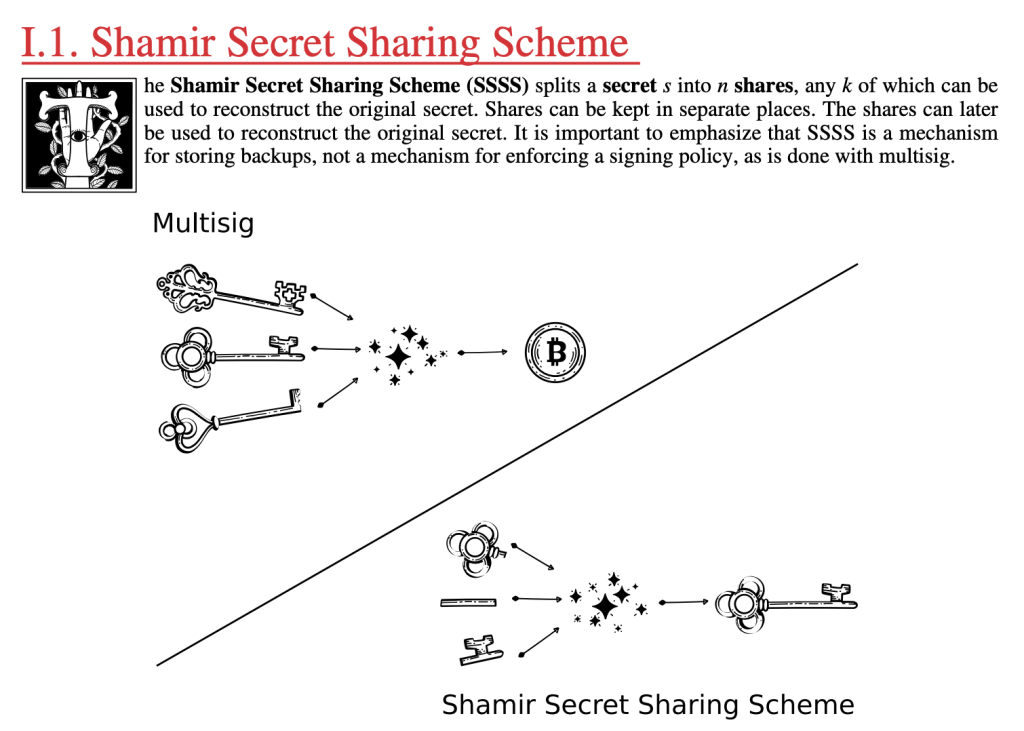
To split the wallet seed, Codex32 integrates Shamir Secret Sharing Scheme. This method allows users to divide the backup of their wallet seed into multiple parts. These parts can be kept in seperate places, providing redundancy and removing single points of failure.
Why Hand Computation?
The rationale behind Codex32 stems from the vulnerabilities of electronic computers. Despite their impressive speed and precision, these machines are susceptible to security breaches and flaws in both hardware and software.

When using computers, there can be risks of exposing or leaking data through various channels. This can happen due to malware or backdoors intentionally or unintentionally built into systems.
Random number generation can also be flawed or predictable due to software bugs or inadequate entropy sources. Rolling dice manually ensures the randomness is not subject to the vulnerabilities of electronic generation methods.
Finally, computers are susceptible to side-channel attacks, where attackers can infer secret information by observing physical effects of computations such as timing, power consumption, or electromagnetic emissions.
By bypassing computers, Codex32 seeks to eliminate those threats.
Offline Wallet Creation Using Codex32
In Codex32, volvelles help perform complex arithmetic operations needed for generating and verifying cryptographic shares. Volvelles are circular paper-based devices used for manual calculations. Made of two or more discs that rotate around a central point, they align to reveal specific information through windows.
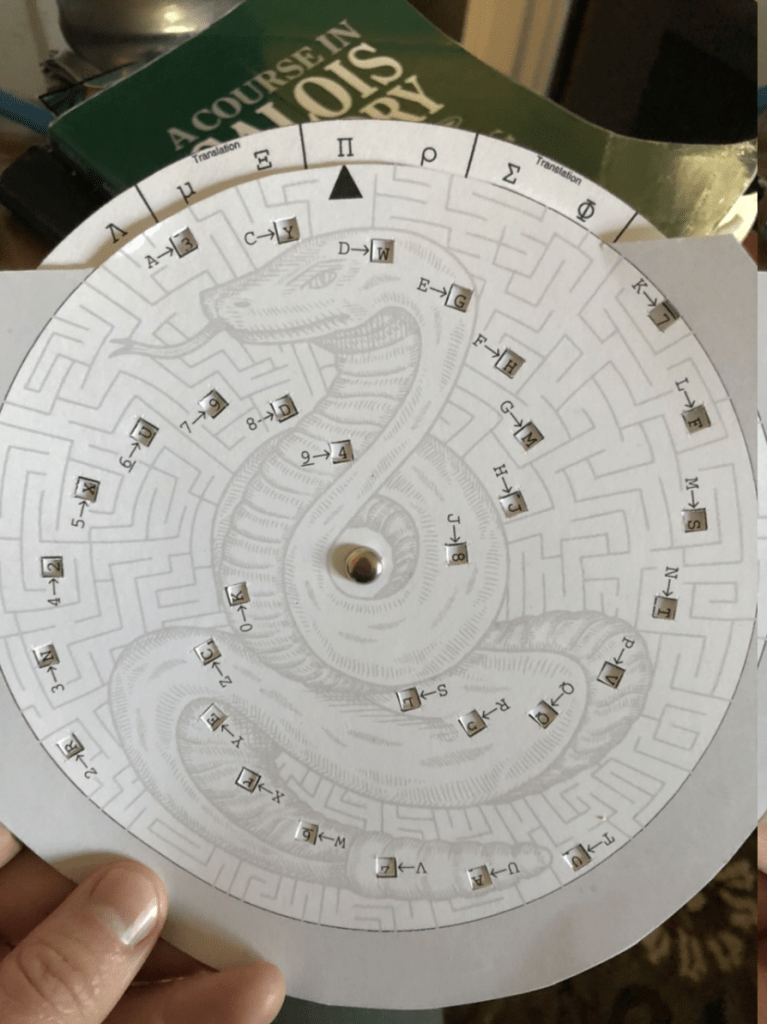
Here’s how to use Codex32:
- Assemble the volvelles: print and construct the circular slide rules from the Codex32 booklet.
- Generate shares: use the dice de-biasing worksheet to roll dice and create random data, filling out the checksum worksheet to compute and verify checksums.
- Derive additional shares: use the translation worksheet and volvelles to translate initial shares into new shares, adding the translated values together.
- Verify and distribute shares: ensure all shares are accurate, then securely distribute and store them for future use.
- Reconstruct the wallet: use the required threshold number of shares to reconstruct the wallet when needed.
Looking Ahead
Today, Codex32 makes it possible to generate a seed and split it into many shares completely by hand. However, for completely offline Bitcoin security, the problem of generating addresses and signing transactions remains to be solved.
Work is ongoing to integrate Codex32 support into various wallets, such as Bitcoin Core, Blockstream Green, Anchorwatch, and Liana.
Plans also include introducing “quickchecks” for easier periodic verification, and further research to enable deriving addresses and signing transactions.
Links
Disclaimer
Codex32 is an experimental scheme and should be approached with curiosity and caution. Its primary value lies in the novelty and educational insight into offline cryptographic techniques.
Posted at block 855088


 Bitcoin Bumblebee
Leave a comment